20 November 2026
Next-generation laboratory space: how AI, robotics and life sciences are reshaping real estate
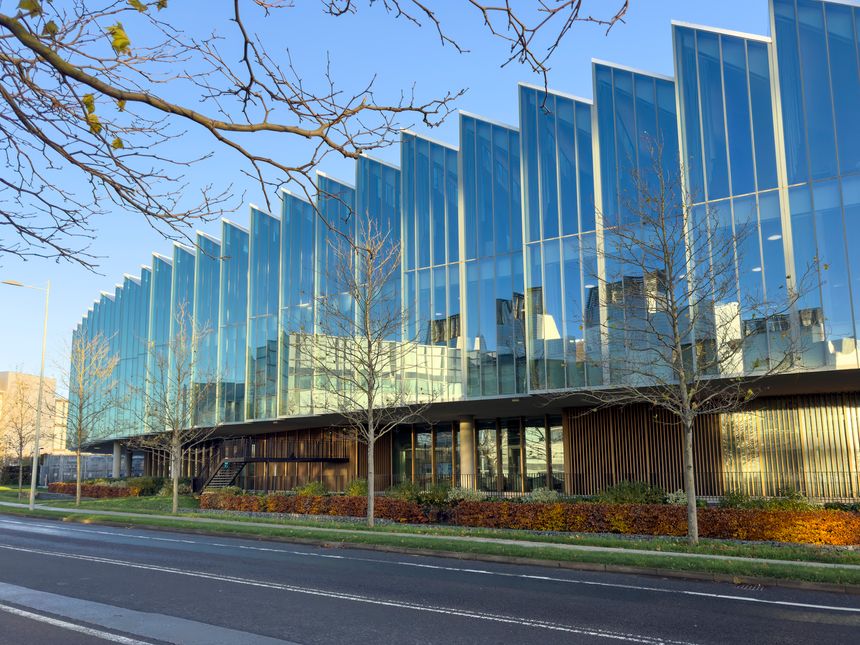
It was a pleasure to join a great panel of industry experts at BE News' Spotlight on Next Gen Lab Space event, hosted by Pioneer Group at Victoria House during London Life Sciences Week.
The discussion focused on a question that is becoming increasingly important for developers, investors and occupiers across the UK life sciences sector:
How will artificial intelligence, robotics and computational science reshape the laboratory space and life sciences real estate of the future?
We explored the emergence of so-called "dark labs", highly automated laboratory environments that require fewer scientists on-site, and considered how AI-driven research could change demand for traditional laboratory space.
As scientific research becomes increasingly computational, will we see a shift in the balance between wet labs, dry labs, office space and specialist technical infrastructure? Could access to data centres, high-performance computing and digital infrastructure become just as important as laboratory facilities themselves?
For those involved in life sciences real estate and science park development, some of the biggest challenges may be infrastructure-related rather than property-related.
The convergence of biotechnology, AI and advanced computing is placing growing pressure on power capacity, cooling systems and water resources. These requirements will become increasingly important when planning new laboratory developments, innovation districts and science campuses.
Yet despite the focus on technology, much of the discussion came back to people.
Dr Angela Kukula's keynote on why place still matters was a timely reminder that scientific innovation depends on more than buildings and infrastructure. Attracting world-class scientific talent, encouraging collaboration and creating thriving innovation ecosystems remain critical to the success of life sciences clusters.
Building laboratory space is relatively straightforward. Creating a successful life sciences ecosystem that supports research, commercialisation and long-term business growth is considerably harder.
One point I raised during the panel was that while we spend a great deal of time discussing how to future-proof laboratory buildings, we should also be thinking about how to future-proof the commercial structures that support them.
Key questions include:
- Who pays for increasingly expensive laboratory fit-outs?
- How can landlords accommodate rapidly changing scientific requirements?
- What leasing structures best support growing biotechnology companies?
- How can investors gain sufficient certainty to deploy capital into specialist life sciences real estate?
These questions feel particularly relevant given two significant announcements this week.
Flagship Pioneering's £100 million commitment to establish an AI-driven biotech company creation platform in London highlights continued confidence in the UK life sciences market. Meanwhile, the £368.5 million financing package for One North Quay, including £147 million from the National Wealth Fund, demonstrates the importance of investing in the infrastructure needed to support scientific growth.
Together, these investments highlight a broader reality: success in life sciences requires investment in both scientific innovation and the real estate, laboratory space and infrastructure that enable it.
We also discussed the UK's position within the global life sciences market. While competing directly with US funding levels or Chinese manufacturing scale may be difficult, the UK remains exceptionally strong in academic research, university-led innovation, healthcare institutions and scientific talent.
The opportunity lies in strengthening the connections between these assets, accelerating commercialisation and helping more biotechnology and life sciences companies scale successfully in the UK.
Ultimately, the future of the UK life sciences sector will depend not only on our ability to create world-class science, but also on our ability to deliver the laboratory space, innovation campuses and commercial environments that allow scientific businesses to grow.
Many thanks to Liz Hamson and the BE News team for organising the event, Pioneer Group for hosting, and my fellow panellists for a fascinating discussion.
Will we see a significant shift in the traditional lab-to-office ratio as science becomes increasingly computational? Will access to onsite or near-site data centres become a more important feature of our innovation campuses?
Subscribe to our latest insights by topic here.
 Chris Xitsas
Partner, Commercial real estate