9 June 2026
Essendi UK Hotels 2 Ltd v London Property Company Ltd – who is responsible for fire safety works under a commercial lease?
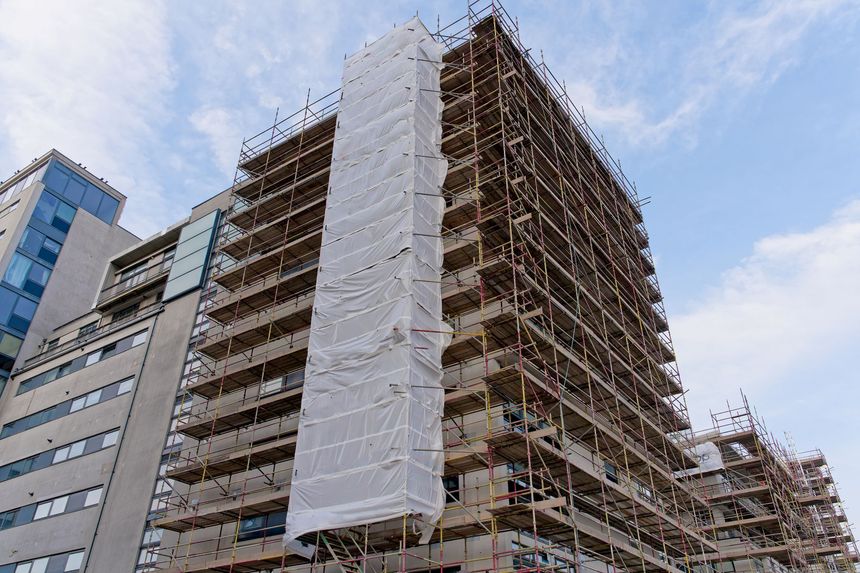
The High Court has handed down an important decision concerning building safety obligations in a commercial lease context (where the Building Safety Act 2022 does not apply). The case addresses landlord liability for unsafe cladding and explores how lease covenants and fire safety legislation interact. It also underscores the importance of careful drafting and risk assessment in commercial leases, particularly where fire safety and cladding issues arise.
Essendi UK Hotels 2 Ltd (“Essendi”) is the tenant of a high-rise hotel in Wembley. In 2024, it discovered that the building was clad with combustible ACM panels similar to those used at Grenfell Tower. The landlord, London Property Company Ltd (“LPC”), managed by Criterion Captial, declined to carry out replacement works. Essendi issued proceedings relying on (i) a covenant requiring the landlord to put and keep the building in “good condition” and (ii) a landlord covenant requiring compliance with all legal obligations.
The court considered whether:
- the landlord’s “good condition” covenant meant that LPC was required to replace the dangerous cladding, even absent any physical deterioration; and
- the landlord’s covenant to comply with legal obligations incorporated duties under the Regulatory Reform (Fire Safety) Order 2005.
The court found in favour of the tenant. The landlord was held to be in breach of both covenants and was effectively required to remediate the ACM cladding. Importantly, the court concluded that ACM cladding could constitute a “dangerous substance” for the purposes of the Fire Safety Order. This is apparently the first decision to consider a party’s obligations under the Fire Safety Order in relation to combustible cladding.
The judgment is notable for several reasons:
- It adopts an expansive interpretation of “keep in good condition” covenants, treating them as capable of requiring works necessary to make a building reasonably safe for occupation, even where there is no conventional disrepair.
- It confirms that, where a lease includes a covenant to comply with legal obligations, duties under the Fire Safety Order can be enforced contractually by a tenant.
- It demonstrates that tenants can obtain relief analogous to a remediation order through private law, even where the Building Safety Act 2022 does not apply (as was the case for this hotel).
- It is one of the first authorities to treat cladding as a ‘dangerous substance’ under the Fire Safety Order, potentially broadening the scope of that regime.
Key Takeaways
For commercial property stakeholders, the decision has potentially wide-reaching implications:
- Landlords may face increased exposure under repairing and compliance covenants, including obligations to undertake proactive safety works.
- Tenants may have a powerful alternative route to compel remediation outside the statutory Building Safety Act framework.
- Standard ‘comply with laws’ clauses may carry more significant risk than previously assumed in a building safety context.
Subscribe to our latest insights by topic here.
 Rosalind Cullis
Partner, Real Estate Disputes
Rosalind Cullis
Partner, Real Estate Disputes