16 July 2026
Knotty problems – the importance of causation in Japanese knotweed cases
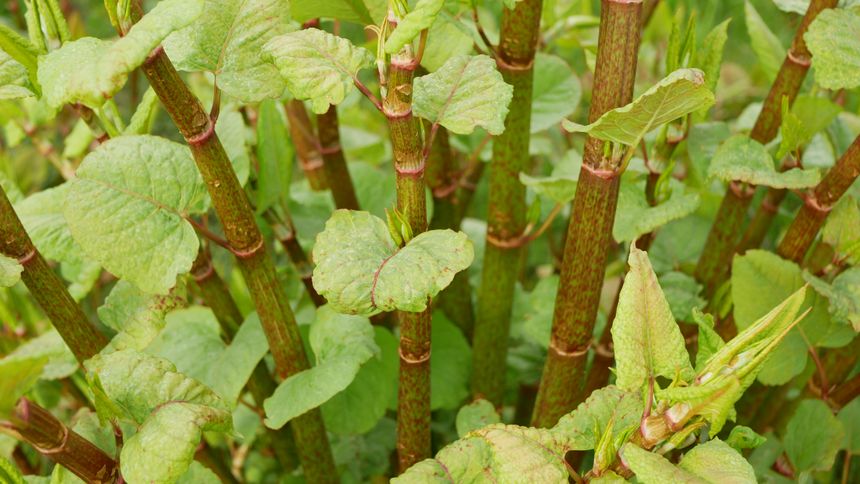
The County Court has handed down its appeal judgment in Jethiga Sateeshkumar v Wigan Metropolitan Borough Council [2026], a Japanese knotweed nuisance claim that turns on causation and the limits of recoverable treatment costs.
The decision considers when Japanese knotweed encroachment amounts to a private nuisance, and whether treatment costs are recoverable where knotweed has already encroached before the defendant came under a duty to act.
Key authorities
This case explores and considers the findings of four key authorities:
- Davies v Bridgend Council [2024] (“Davies”)
The Supreme Court held that a claimant cannot recover damages for diminution in value caused by Japanese knotweed that encroached before a defendant’s duty arose, applying the “but for” causation test. Davies left open whether treatment costs for knotweed could be recoverable as a reasonable cost of abating a continuing nuisance.
- Williams v Network Rail Infrastructure Ltd [2018] (“Williams”)
Williams confirmed that Japanese knotweed may amount to an actionable nuisance where a landowner, aware of its presence and the risk of encroachment, fails to take reasonable steps to prevent it spreading to neighbouring land.
- Delaware Mansions Ltd v Westminster City Council [2001] (“Delaware”)
The House of Lords held that a claimant may recover reasonable costs incurred in abating continuing nuisances, including where tree roots continued to draw water from the claimant’s land and thereby constituted a continuing nuisance.
- Jalla v Shell International Trading and Shipping Co Ltd [2023] (“Jalla”)
The Supreme Court clarified that a continuing nuisance requires repeated activity by the defendant, or an ongoing state of affairs for which the defendant is responsible. A one-off event with continuing consequences is not enough for a continuing nuisance.
Facts
Mrs Sateeshkumar (the “Claimant”) had owned the freehold of a house since 2008. The defendant, Wigan Metropolitan Borough Council (the “Council”), owned and maintained an adjoining park where Japanese knotweed had been present for at least 20 years. In 2024, the Claimant issued proceedings seeking £2,635 for treatment costs of eradicating knotweed from her land, and damages for diminution in property value.
The district judge found:
- Knotweed encroached from the Council’s land before 2018.
- The Council knew, or should have known, of its presence in 2018.
- The Council did not take eradication steps until 2020 at the earliest.
- The Council was liable for the treatment costs as a continuing nuisance, but dismissed the diminution claim following Davies, because the encroachment pre-dated the 2018 breach of duty.
The Council appealed, arguing that the Claimant had not established a causative link between the breach of duty and the presence of Japanese knotweed requiring treatment, as the encroachment occurred before the Council’s actual or constructive knowledge in 2018.
Appeal
On 22 June 2026, the appeal judge allowed the appeal, overturning the district judge’s award of knotweed treatment costs to the Claimant. The appeal was made on one ground: that the judge erred in law in finding there was a continuing nuisance or that the Claimant was entitled to recover costs of treating knotweed, as the Claimant had not shown a causative link between a breach of the duty and the presence of knotweed.
The appeal judge concluded that the case was not directly comparable to Delaware or Jalla. Unlike tree roots in Delaware, knotweed rhizomes on the Claimant’s land were essentially self-sufficient and could continue to flourish without knotweed remaining on the Council’s land (given it had been relatively successfully eradicated in 2025). The central concept of nuisance, as identified in Williams, is reasonableness as between neighbours. The appeal judge concluded that it was not reasonable to impose liability on the Council for the Claimant’s remedial costs, because by the time the Council could reasonably have taken steps to prevent the spread, those costs had already arisen as a result of the earlier encroachment.
The appeal judge gave four main reasons pointing in favour of the Council:
- Jalla confirms that a continuing nuisance requires repeated activity by the defendant or an ongoing state of affairs for which the defendant is responsible which causes undue interference. Here, the relevant undue interference was caused by knotweed on the Claimant’s land, not by the presence of knotweed on the Council’s land. The cause of the loss lies outside the scope of activity for which the Council can be liable.
- The Claimant’s approach would have a striking consequence for the nature of liability of private nuisance. The Council would be required to meet remedial costs and compensate for damage that could not have been avoided by the Council taking greater care, since the damage was caused before the Council could be blamed for not dealing with it.
- The Council could only abate the nuisance by accessing and treating the Claimant’s land, making liability dependent on matters outside the Council’s control. The judge noted that it was perfectly possible that the Council would not even know of the spread to the Claimant’s land so that it did not know of its liability to eradicate.
- Extending liability in this way could create an indefinite chain of liability for later spread from the Claimant’s land to neighbouring land.
Although not binding, this judgment is a useful reminder that pre-breach Japanese knotweed treatment costs are not recoverable simply by framing the claim as one for abating a continuing nuisance. The key question remains when the defendant knew, or ought to have known, of the knotweed, and when the encroachment occurred.
Subscribe to our latest insights by topic here.
 Charis Almond
Associate, Real estate disputes
Charis Almond
Associate, Real estate disputes